
Rainy Day Project: Putting Previous Gypsum Applications to the Test
Rainstorms provide opportunity to see if soil amendments are working into the soil
Rainstorms can be a blessing and a curse for California growers.
The rain can wreak havoc on field operations, leading to flooding, runoff and making getting into the field difficult for equipment.
But the rain also fills up our reservoirs and pushes moisture, soil amendments and nutrients down through the soil profile.
November rains provide a great opportunity to look back on recent soil amendment applications, and see if your gypsum, compost and other products are going to work in the soil, or failing to break down completely.
Call it your Rainy Day Project.
Whether you applied gypsum, compost or other amendments before the rains, these initial storms offer an opportunity to get out in the field and evaluate how your soil and amendments are responding … answering the following questions:
- Are your amendments beginning to work their way to the root zone?
- Are areas that previously experienced ponding or other issues showing signs of improvement?
- Is water penetrating the soil more effectively, or are you still seeing the same problems you experienced previously?
These are important observations for growers, particularly when planning for next season, and Holloway encourages you to get out into your fields, vineyards and orchards, and see where you applied soil amendments and how it’s performing.
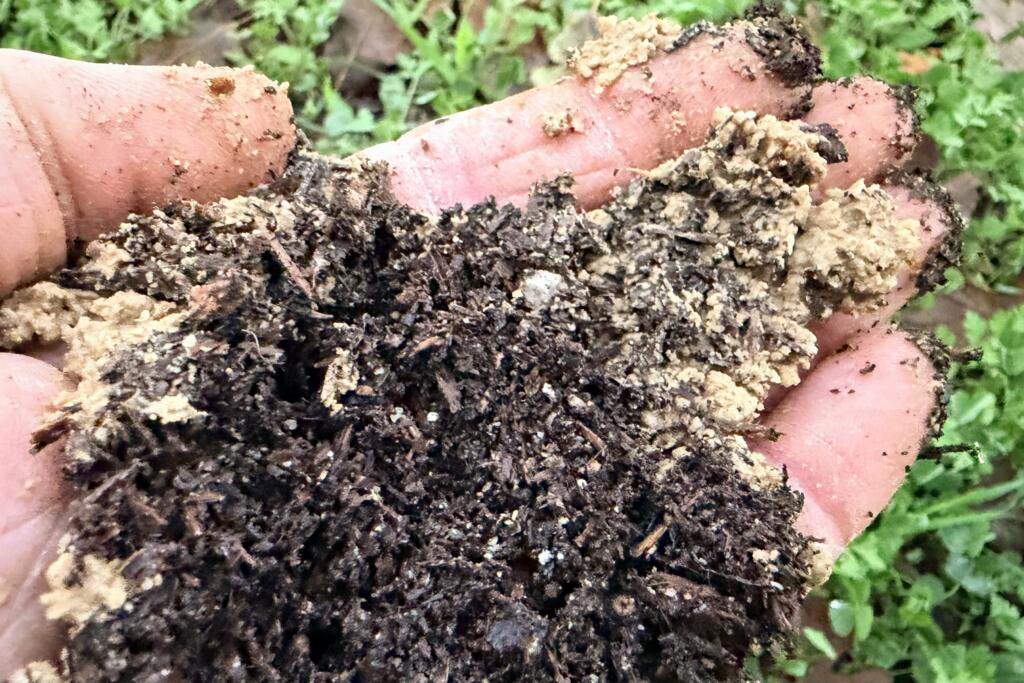
Gypsum starting to work its way into the soil after the first fall rains.
No matter the supplier you use, don’t assume the job is done once the material has been spread. Take the time to see the results with your own eyes, get your soils tested, compare conditions on multiple blocks and fields, and get a better understanding of what is happening beneath your boots.
“Whether you are a first-time Holloway customer, or a longtime believer in gypsum, we urge you to get in the field, look where you applied your soil amendments, and see the results,” said Daniel Terry, Holloway’s Senior Vice President, Director of Products and Sales.
“Did you notice a change after the rains? Even after the first couple storms, you can start noticing if the material is going to work in the soil, and if issues like ponding are already being addressed.”
Put Your Applications to the Test
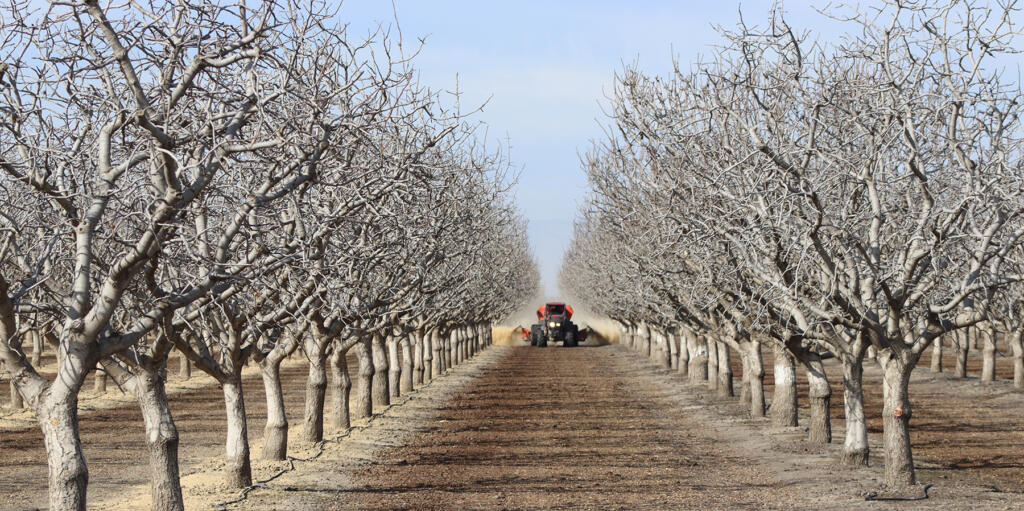
Fall and winter rains can be a valuable tool for growers working to improve soil conditions.
When properly timed with soil amendment applications, rainfall helps move gypsum into the soil profile, where calcium can begin working to solve sodium-related issues and improve soil structure.
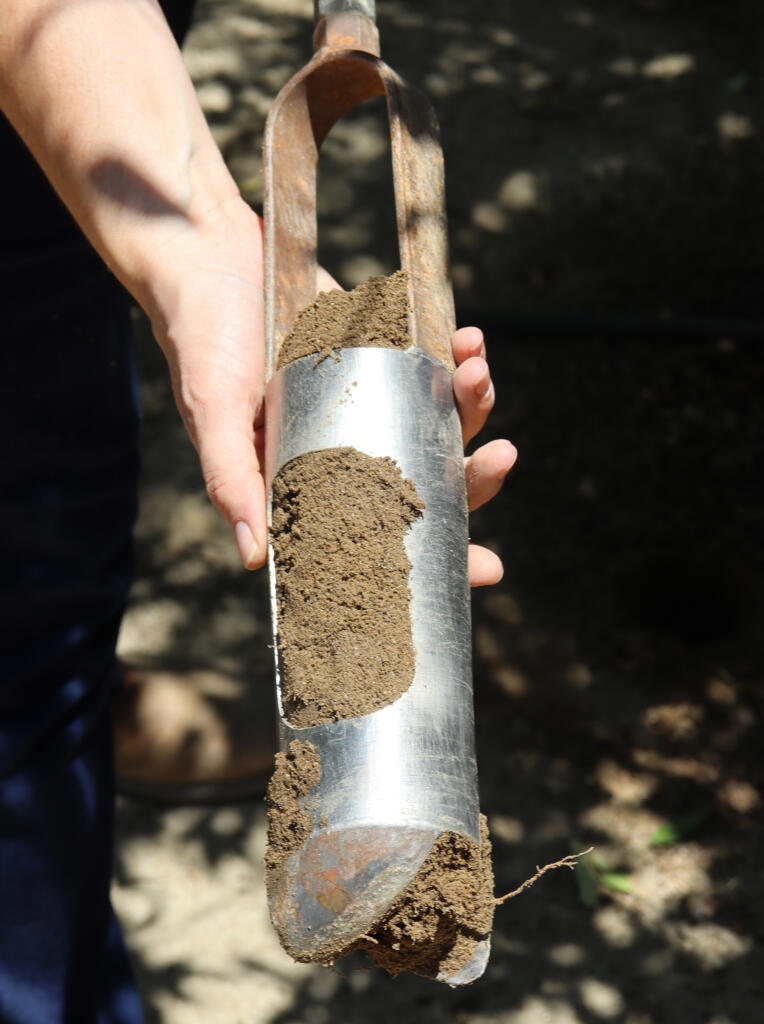
Taking soil samples helps see where your soil health stands.
As Holloway Senior Agronomist Allie Cushnyr explained in her article, “Using Winter Rainstorms to Push Gypsum Into the Soil,” true dihydrate gypsum is the most soluble form of gypsum. When paired with rain or irrigation, it begins dissolving and moving into the soil profile ASAP.
“Many of the fields I work with struggle with salt accumulation within the soil,” Cushnyr notes. “These salts come from various sources including the parent material of the soil, the water we use to irrigate our fields with fertilizers, and potentially areas with high water tables. Wintertime is commonly a period of leaching salts out of the root zone by applying clean water to the field…
“The best source of water is right from Mother Nature herself, when it falls from above. California’s southern valley sees significantly less rainfall than the northern regions, so their opportunity to use rain for leaching goes down. Water is the first step to leaching salt accumulation, but utilizing true dihydrate gypsum is a great way to take advantage of winter rain.”
This process takes multiple rain or irrigation events.
That’s why these winter storms are a great opportunity. Rather than looking at rain solely as a challenge to field operations, growers can use it to help incorporate applied amendments and evaluate how their soils are responding, if ponding is being minimized, etc.
“Preventing ponding in a field is important,” Cushnyr notes, “because too much water will increase the risk for soil borne diseases, affect root health and eventually disrupt the productivity of the orchard.”
Be sure to read more about resolving ponding issues in Cushnyr’s article discussing practical solutions for “Improving Infiltration and Reducing Ponding.”

Ponding issues in an almond orchard after a heavy rain in the South Valley.
Not All Gypsum Works at the Same Speed
Another consideration when evaluating soil amendment applications is the type of gypsum you’re applying in the field.
Last year, Holloway’s agronomy team commissioned independent third-party laboratory testing to compare five different “gypsum” products.
The results highlighted an important distinction between true dihydrate gypsum and anhydrite, another form of calcium sulfate found in some competing products.
Holloway’s 55% gypsum contained high-quality dihydrate gypsum (CaSO4+2H2O) rather than anhydrite. The additional water molecules in dihydrate gypsum make it more water-soluble, allowing it to dissolve and move with water more readily.
In practical terms, that means Holloway’s gypsum can begin going to work much sooner when it comes into contact with water.
DOWNLOAD THE COMPLETE GYPSUM ANALYSIS
What Growers Are Saying
Test Your Soil. Review the Results. Make a Plan.
That scientific approach to soil amendments is everything when it comes to soil health, Scott Dewar of Crown Harvesting in Bakersfield said in a recent Holloway testimonial.
“With Holloway, we do our tissues (samples) three times a year,” Dewar said. “We (test) our soils in the fall and spring, and it’s off of our fall soils where we talk to (our sales representative) and determine how much and where we’re going to put our gypsum.”
His message is an important reminder that successful soil management starts with understanding what’s happening beneath the surface. Soil sampling gives growers a better picture of existing conditions, helps identify potential problems and provides a foundation for making informed amendment decisions.
But testing is only the first step. Following up on those results, doing field walks to evaluate previous applications and making adjustments throughout the year based on what the soil needs are equally important.
For growers who have already applied gypsum, this means looking beyond the application itself.

Reviewing soils reports throughout the year helps ensure optimal soil health.
Healthy soil is an ongoing investment. The growers who get the most from that investment are the ones who consistently evaluate, test, adjust and build on what they’ve learned.
Good luck to all of our growers during the upcoming El Niño storms, and we hope you all have a wonderful holiday season!
Contact Holloway to Learn More
To learn more, contact Holloway today to schedule soil sampling, review your previous amendment applications or speak with a local agronomist about your soil management program. Call (661) 758-6484 or visit hollowayag.com/difference to get started.
Want to learn more? Fill out the form on this page to discuss your soil needs with a local agronomist in your region.
Contact Us Today
Fill out the form below to discuss soil sampling or amendments with a local representative today.
Join Over 800 Companies Using Holloway Today.
Or Become Part of The Holloway Group to Further Your Career.